
Packing for a work trip or a weekend getaway in the Colorado mountains should be exciting, but leaving your furry family members behind often brings a wave of guilt and worry. You want to know your dog or cat is safe, happy, and enjoying their own local adventures while you are gone.
The secret to a stress-free trip isn’t just hiring a trustworthy professional; it is setting them up for absolute success. Thoroughly preparing your home, organizing essential documents, and detailing your pet’s unique quirks prevents miscommunications.
What is a pet sitter checklist? > A pet sitter checklist is a comprehensive document that outlines your pet’s feeding schedule, medication needs, emergency contacts, and behavioral quirks to ensure safe, uninterrupted care while you are away.
Whether your dog needs a daily high-energy trail run or your senior cat requires specific veterinary-informed care, writing down these details ensures your pet’s daily routine remains completely uninterrupted. Professional pet sitting officially refers to the dedicated care provided to your pet in the safety and comfort of your own home—making thorough preparation absolutely vital.
Providing your professional pet sitter with a comprehensive pet sitter checklist and a thoughtfully prepared home ensures your pets stay safe, happy, and well-cared for.
The key takeaway is this: A little upfront preparation gives you complete peace of mind, allowing you to truly relax and enjoy your trip knowing your best friend is in expert hands.
1. What Emergency Contacts Should Be on Your Pet Sitter Checklist?
Leaving your pets behind is much easier when you know their health and safety are completely covered. While emergencies are rare, being thoroughly prepared is the hallmark of excellent pet care.
💡 Dr. Kira’s Pro-Tip: Before you hand over your emergency contact list, ensure you’ve properly vetted your candidate. Check out our guide on 15 critical questions to ask a pet sitter before you hire to ensure they have the experience and medical knowledge to handle the unexpected.
Veterinary and Medical Details
Summarizing your pet’s critical health information is vital for their well-being. This is especially important if you have an anxious dog or a senior cat with ongoing health conditions. As veterinary professionals like Dr. Kira at Off Road Paws know, quick access to medical records and authorized care can make all the difference. According to the American Kennel Club (AKC), you should contact your veterinarian ahead of your trip to officially authorize your pet sitter for care and establish a spending cap for emergencies. Furthermore, it is recommended leaving payment details directly with your vet so your sitter doesn’t have to pay anything upfront.
- Provide clinic info: Vet name, clinic address, and phone number.
- Detail emergency care: Name and driving directions for the nearest 24/7 emergency animal hospital.
- Insurance details: Make sure your pet’s microchip info and insurance cards are accessible in your paperwork folder.
Local Backup Contacts
Even the most reliable pet sitters occasionally need a local support system. Providing backup contacts ensures the sitter always has someone to turn to if they cannot reach you immediately.
- Share your travel itinerary: List flight times and destination time zones.
- Assign a trusted local contact: A neighbor or family member who can assist the sitter in a pinch.
⏱️ Your Quick-Glance Prep Timeline
To prevent last-minute panic, we recommend spacing out your home preparation. Use this simple timeline before your sitter arrives:
| When to Do It | Essential Action Item |
|---|---|
| 1 Week Before | Call your clinic to authorize veterinary care and set an emergency spending limit. |
| 3 Days Before | Stock up on food, medications, and your 20% emergency buffer. |
| 2 Days Before | Notify your trusted local neighbor that an Off Road Paws professional will be visiting. |
| The Night Before | Print out your checklist, set out the any necessary pet gear, and test your spare keys! |
2. What Daily Routines and Quirks Should You Detail for Your Pet Sitter?
Pets thrive on predictability. By carefully documenting your pet’s schedule, you give your sitter the exact blueprint for a perfect, stress-free day.
Feeding and Medication
Consistency prevents unexpected digestive issues and significantly reduces separation anxiety.
A comprehensive dog sitter prep document must cover exact feeding times, dietary restrictions, medication schedules, and favorite activities.
- Specify feeding times and portions: Write down exact meal times and treat allowances.
- Medication instructions: Document dosages, timing, and “tricks” (like pill pockets).
Exercise and Behavior
Our active Colorado pets love to move. Helping your sitter match your pet’s energy ensures they get the right fitness without overdoing it.
- Outline exercise schedule: Note preferred dog walking or hiking routines around Boulder, Louisville, or Lafayette.
- Document fears and quirks: Note specific fears (like thunderstorms or fireworks) and unique quirks on a leash.
The most important factor is this: The more granular you are about daily habits, the easier it is for your sitter to replicate your standard of care.
When you tell your sitter your dog is “anxious” or “reactive,” they need to know exactly what that looks like before a walk begins. This masterclass by Victoria Stilwell is the gold standard for recognizing subtle stress signals—like lip licking or “whale eye”—that help your sitter prevent issues before they start. Watching this ensures your sitter provides the same intuitive, expert care you do every single day.
3. What Must-Have Supplies Should You Stock for Your Pet Sitter?
Preparing your home goes beyond writing; you need to physically stock the house so your sitter can focus entirely on care.
The “20% Buffer Rule”: Always leave 20% more food, medication, and treats than you think you’ll need to account for travel delays.
- Stock extra supplies: Food and medication for the trip plus a 4-day buffer.
- Comfort items: Leave out favorite toys and familiar items like a worn t-shirt to soothe anxiety.
- Cleaning and Gear: Leave out necessary items like winter walking gear and pet-safe enzymatic cleaners.
4. How Should You Prepare Your Home for the Pet Sitter’s Arrival?
A thoughtfully prepared home prevents logistical headaches for your sitter.
The industry standard for home access, as recommended by the National Association of Professional Pet Sitters (NAPPS), is the “Redundant Access Rule”: Always provide two methods of entry (e.g., a code and a physical key).
- Access details: Spare keys, alarm codes, and smart lock instructions.
- Climate Control: In Louisville or Broomfield, weather shifts 40 degrees in an hour. Leave instructions for the thermostat.
- Emergency Shut-offs: Note the location of the main water shut-off and circuit breaker.
Why a Pet Sitter Checklist is Your Key to a Stress-Free Vacation
A truly successful pet sitting experience always comes down to clear communication and thoughtful preparation. When you provide well-stocked supplies and a perfectly prepped home, you completely remove the guesswork from your pet’s daily care.
Ready for an Adventure-Ready Pet Sitter?
Do not wait until the night before your trip to start getting organized. Write out your comprehensive checklist today so you are completely ready for your next getaway.
Planning your travel budget? To help you prepare for your next trip, we’ve put together a local pet sitter cost guide for 2026 specifically for active pet parents in the Boulder and Louisville area.
When you need a veterinary-informed, professional team to care for your beloved pets in Louisville, Lafayette, or Boulder, reach out to us. See our Services and Pricing or read our Client Testimonials to see why Colorado pet parents trust us.
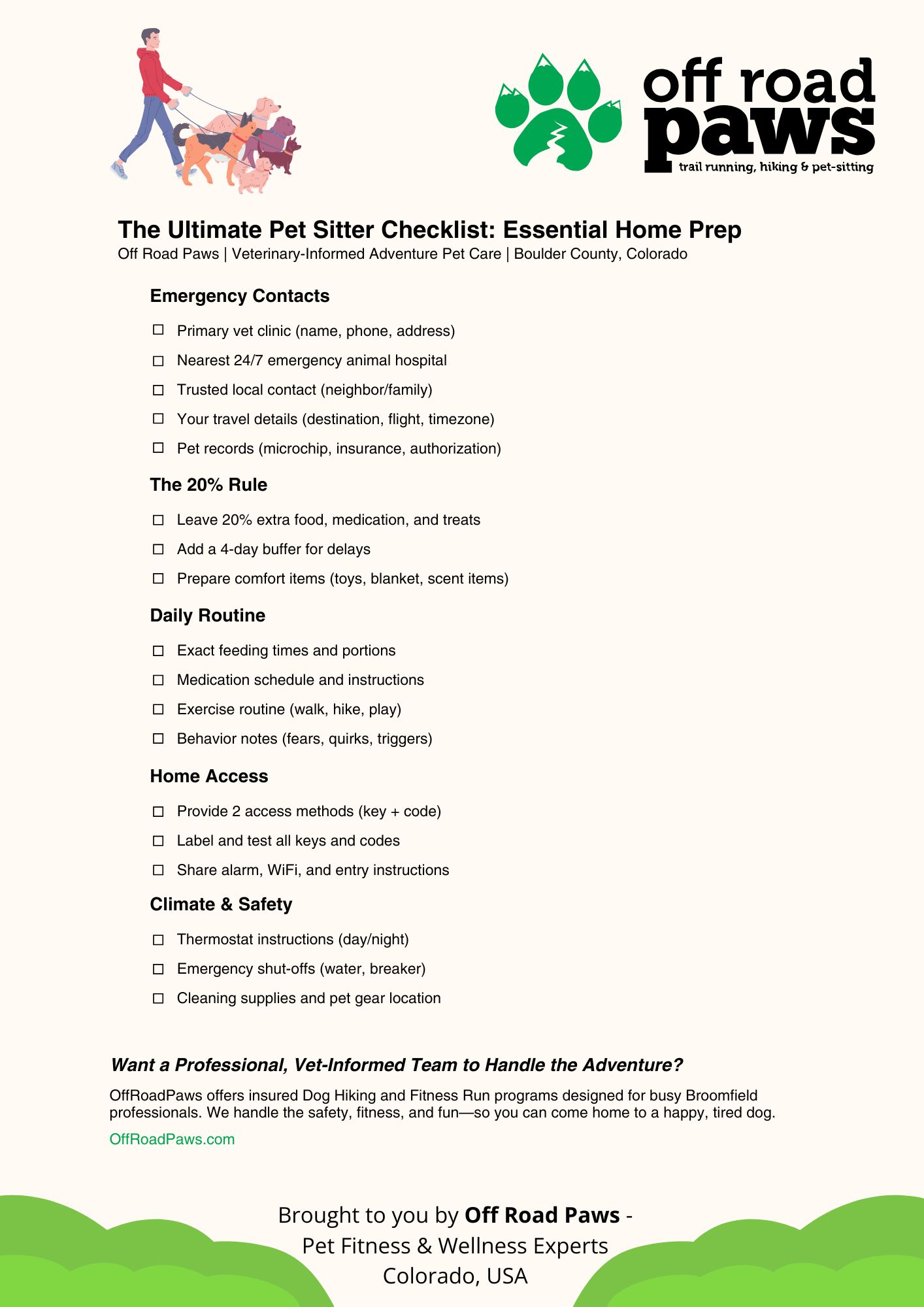
The Ultimate Pet Sitter Checklist (Printable PDF)
Don’t want to write everything out from scratch? We’ve condensed this entire guide into a clean, fridge-friendly PDF. Print it, fill it out, and hand it directly to your sitter before your next trip!
- Emergency & Vet Details: Contacts, records, and the 20% buffer rule.
- Daily Routines: Feeding times, medications, and behavioral quirks.
- Home Access & Climate: Key instructions and Colorado weather prep.