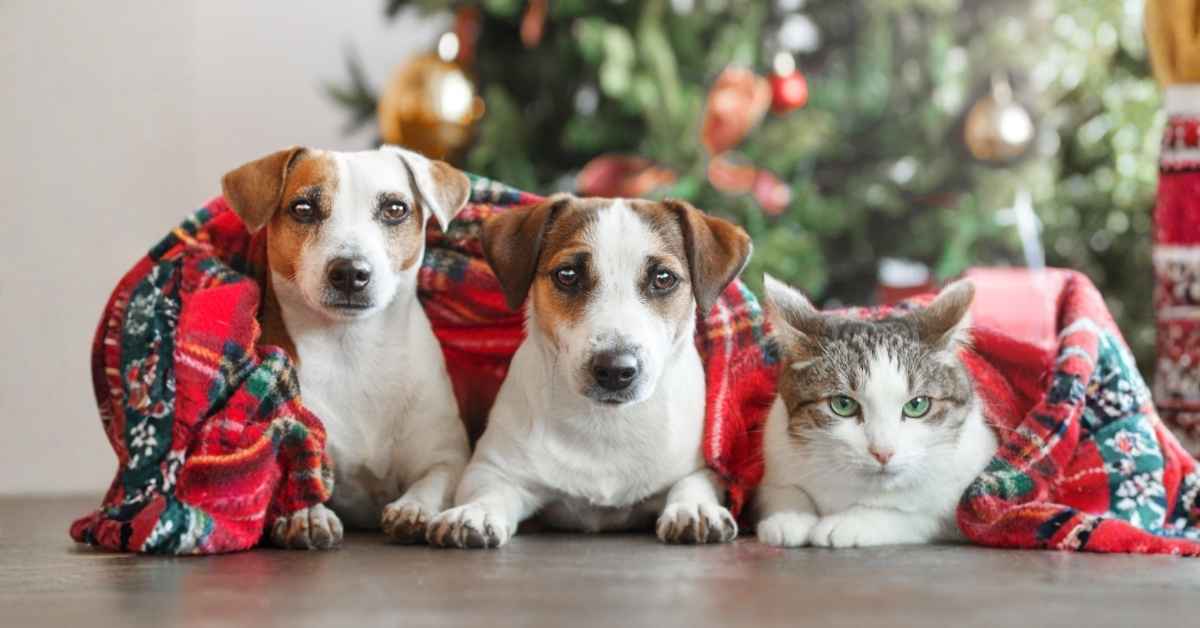
The holidays in Colorado are truly magical, filled with snowy trails, cozy fires, and warm family gatherings. However, for our four-legged family members, the festivities often bring hidden risks that can turn a celebration into an emergency.
Dr. Kira’s Safety Tip: Winter is the time of year when Poison Control Centers receive significantly more calls than normal. As you balance decorating, cooking, and hosting, it is easy to overlook common hazards like toxic foods, tinsel, or unlocked doors.
To ensure a joyful holiday season, you must proactively pet-proof your celebrations by managing food risks, securing hazardous decorations, and minimizing stress for your furry companions.
This guide provides veterinary-backed holiday pet safety tips to help you navigate the season with confidence. By identifying these dangers early, you can focus on making memories and enjoying winter adventures with your pets, knowing they are safe and sound.
Which Holiday Foods Are Toxic to Pets?
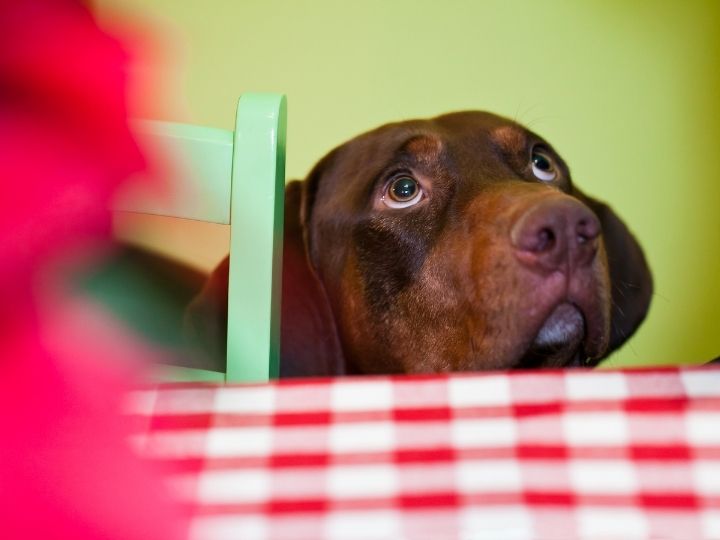
Those puppy eyes are hard to resist, but fatty table scraps can cause serious health issues.
Sharing a holiday meal is a tradition, but many human foods are dangerous for our pets. While it is tempting to resist those puppy eyes, fatty table scraps like turkey skin, gravy, or buttery dishes can trigger pancreatitis—a painful and potentially life-threatening inflammation of the pancreas.
Dr. Kira’s Safety Tip: If you want to treat your pet, stick to pet-safe options. Check out our guide on foods your dog can eat or safe fruits and veggies.
The “No-Feed” List: Common Toxic Ingredients
Make sure your guests know the rules. Several common holiday ingredients must be kept strictly off-limits:
- Chocolate: All chocolate contains theobromine, but baking chocolate is the most dangerous—it contains nearly 10–20 times more toxic theobromine than milk chocolate.
- Xylitol (Birch Sugar): Often found in sugar-free candy and baked goods, this artificial sweetener is deadly. Even small amounts can cause liver failure. Read more in our dangers of Xylitol guide.
- Onions and Garlic: These can destroy red blood cells and cause anemia.
- Grapes and Raisins: Even small amounts can cause sudden kidney failure.
- Cooked Bones: Unlike raw bones, cooked bones (turkey/chicken) become brittle and can splinter, causing choking or severe internal damage.
Drinks and Dough: Hidden Kitchen Hazards
Holiday beverages and baking projects pose significant risks if left unattended:
- Alcohol: Drinks like eggnog or wine are sweet and tempting. Ingestion can lead to dangerous intoxication, vomiting, and respiratory failure.
- Unbaked Yeast Dough: Never leave dough to rise on the counter. In a pet’s warm stomach, the dough continues to expand, causing dangerous bloating and obstruction. Furthermore, the fermentation process releases alcohol into the bloodstream, leading to alcohol poisoning.
How to Pet-Proof Your Christmas Tree & Decor
A beautifully decorated tree is the heart of holiday decor, but it can be a toppling hazard for active pets. You should secure your tree to a wall or ceiling using fishing line to prevent it from falling over if a cat climbs it or an exuberant dog bumps into it. This simple step protects both your pet and your fragile ornaments.
Tree Water & Pine Needles
If you choose a real tree, you must cover the water reservoir. Tree water is often a breeding ground for bacteria and may contain fertilizers or pine sap, which can cause nausea and diarrhea if ingested. Additionally, be aware that pine needles—whether real or artificial—can irritate your pet’s mouth and intestines if swallowed.
The Dangers of Tinsel, Lights, and Ornaments
Some of the most traditional decorations pose the biggest threats.
- Tinsel & Ribbon (The “Silent Killer”): Tinsel is dangerous, especially for cats. If swallowed, it acts as a linear foreign body—a medical emergency where the string bunches up the intestines like a drawstring, often requiring surgery. Off Road Paws recommends avoiding tinsel entirely.
- Electrical Cords: Puppies and kittens often see cords as chew toys. Biting through them can cause severe oral burns or electrical shock. Use cord protectors or hide wires.
- Batteries: Keep battery-operated decorations secure. Punctured batteries can leak alkaline or acidic fluid, causing chemical burns to the mouth and esophagus.
Dr. Kira’s Safety Tip: For a complete list of decoration risks, read our detailed guide on Holiday Hazards for Our Pets.
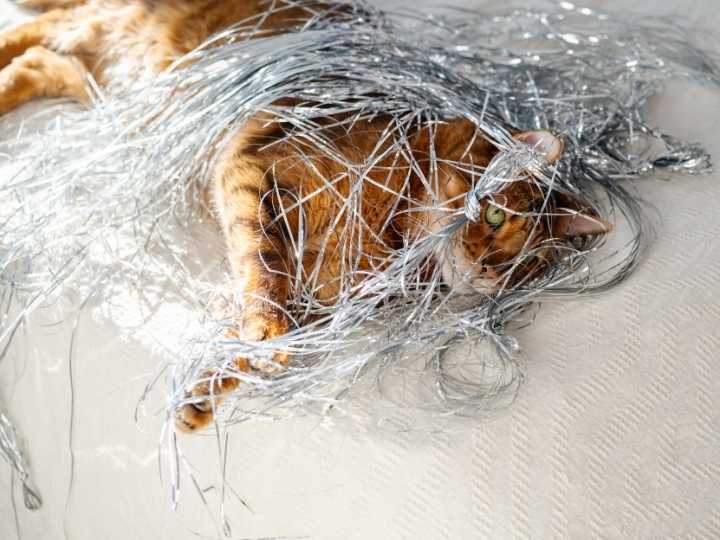
Tinsel is a ‘silent killer’ for cats. We recommend avoiding it entirely to prevent emergency surgery.
Which Winter Plants & Products Are Toxic?
When you deck the halls, it is crucial to know which plants are safe. There is a common misconception about Poinsettias; while they can irritate your pet’s mouth, they are rarely fatal. However, other festive flora pose severe risks.
The “Do Not Touch” Plant List
- Lilies: The most dangerous plant for cats. Even minimal contact with pollen can cause kidney failure.
- Mistletoe & Holly: harmful if ingested, causing severe gastrointestinal upset and cardiovascular problems.
- Liquid Potpourri: Contains essential oils that can severely damage a pet’s mouth, eyes, and skin on contact.
Dr. Kira’s Safety Tip: For a full list of safe alternatives, read our guide on Safe Gardening for Your Pets.
Colorado Winter Risks: Ice Melts & Snow Globes
Living in Colorado means dealing with snow, but winter products can be hazardous.
- Ice Melts: Commercial ice melts are often toxic and can be fatal if your pet licks their paws after a walk. Use pet-friendly melts or wipe paws with a warm cloth immediately after every walk. Learn more in our guide to Care of Dogs Paws in Winter.
- Snow Globes (Hidden Danger): Many snow globes contain ethylene glycol (antifreeze), which is highly toxic. If a globe breaks, the sweet smell can attract pets to lick the liquid, leading to potentially fatal intoxication. Clean breakages immediately.
Planning a snowy adventure? Check our tips for keeping pets safe in cold weather.
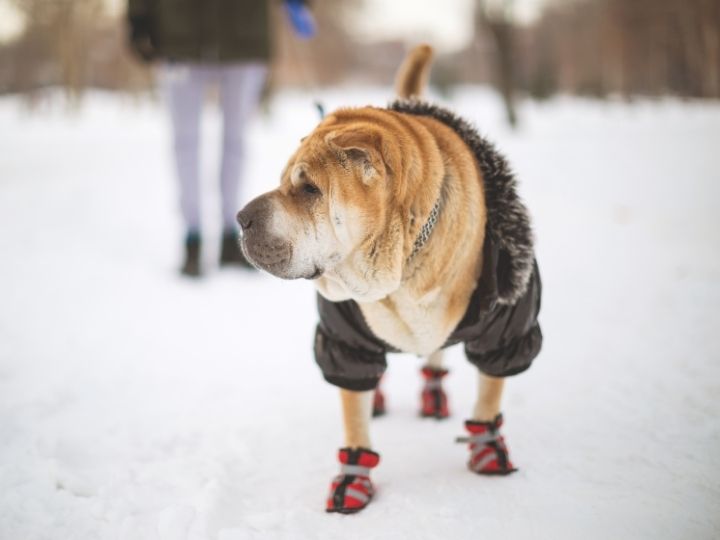
Dog wearing winter coat and protective booties in snow – paw safety tips for Colorado winter.
How to Manage Pet Anxiety & Guest Safety
The holidays often bring a revolving door of friends and family, which can be overwhelming. With guests coming and going, the risk of a pet slipping out unnoticed skyrockets.
Prevent the “Door Dash”
To prevent an accidental escape, watch the door closely or keep your pets in a secure area during arrival times. Just in case the unthinkable happens, ensure your pet’s microchip information and ID tags are up to date before the festivities begin.
Create a “Sanctuary Space”
To help your pet cope with noise and overstimulation, create a designated safe space. This should be a quiet retreat (like a separate room or crate) equipped with fresh water, cozy bedding, and their favorite toys.
Dr. Kira’s Safety Tip: Need help calming an anxious dog? Read our tips on calming pups and maintaining routine.
The “Guest Luggage” Hazard
Be mindful of what houseguests bring into your home. Visitors often forget to pet-proof, leaving medications (like Tylenol or heart medicine) in open suitcases or on low tables.
- Rule of Thumb: Ask guests to keep luggage zipped and elevated.
- Why it matters: Pets are naturally curious and often sniff out pills, leading to serious medical emergencies.
Overwhelmed by hosting? Consider our Holiday Pet Sitting Services to give your pet specialized attention.
Emergency Preparedness & Professional Help
The holidays are about creating joyful memories, not managing stressful emergencies. By taking simple steps—like securing your tree and creating a quiet space—you can prevent the most common hazards.
🚨 The “Save This” Emergency List
To be fully prepared, take a moment now to program these numbers into your phone. Knowing where to go can save crucial time.
- ASPCA Poison Control Center: (888) 426-4435 (Keep this handy if you suspect ingestion of chocolate, plants, or unknown items).
- Your Local Emergency Hospital: +13034426262
- Off Road Paws: +13038180708
Need Extra Help This Season?
If you are feeling overwhelmed with holiday prep, Off Road Paws is here to help families in Louisville, Lafayette, and Broomfield.
Whether your dog needs a decompressive trail hike to burn off that holiday energy or you need trusted pet sitting while you host guests, we provide the veterinary-informed care you deserve.
❄️ Planning to hire a pet sitter for the holidays?
Holiday travel and hosting often mean you need a professional to step in. Before you book anyone, ensure your dog’s safety by reading our complete guide on the 15 Critical Questions to Ask a Pet Sitter Before You Hire. Then, find out exactly how to budget for seasonal holiday surcharges with our breakdown of the Average Pet Sitter Cost in 2026.
Contact us today to schedule your holiday pet care and let us help you make this season safe and special for everyone!
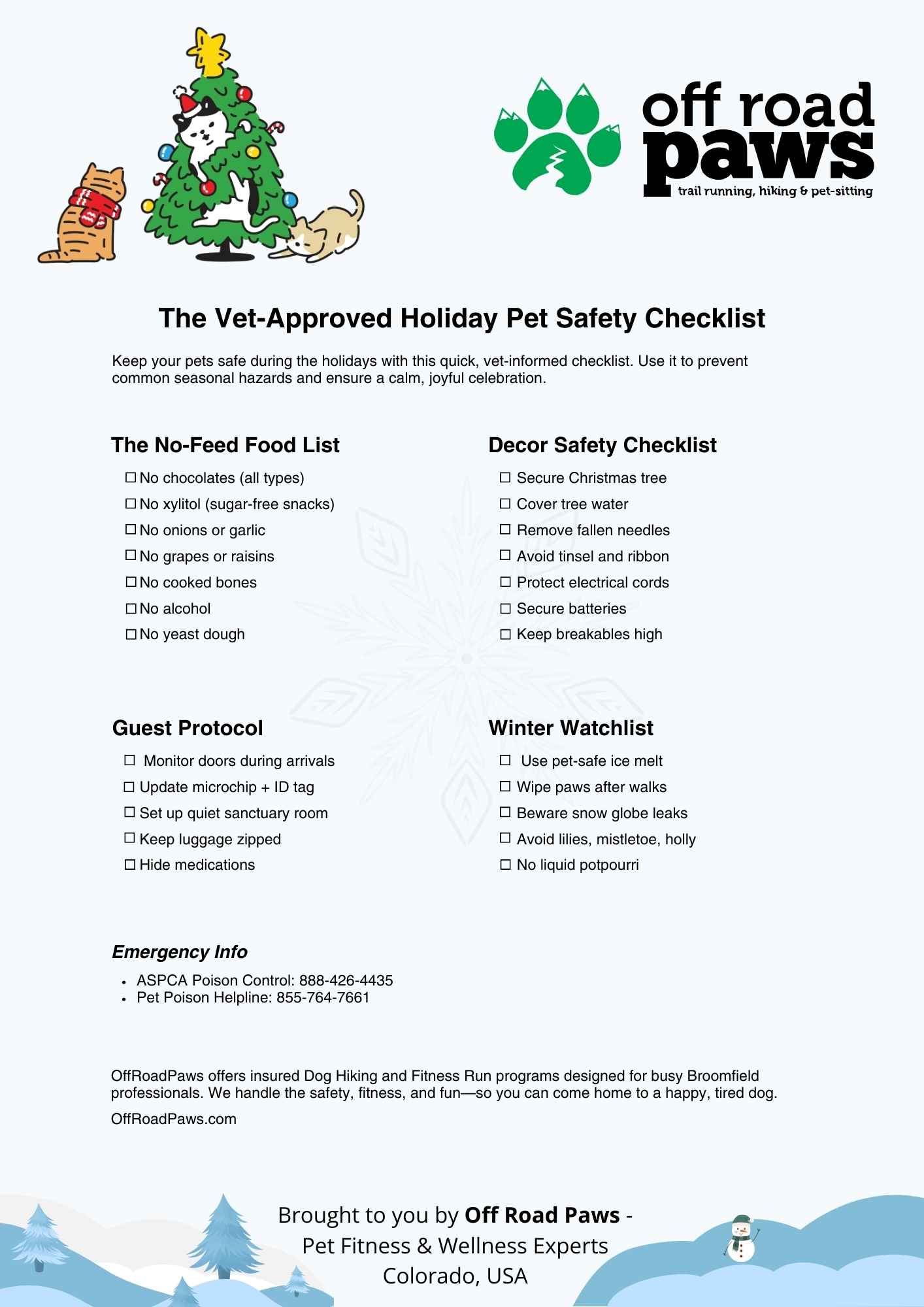
Hosting guests or hiring a pet sitter? Make sure everyone knows the rules. Download and print this Holiday Safety Cheat Sheet to leave for your guests or sitter, ensuring your pet stays safe no matter who is watching them.