Colorado winters bring beautiful snow to Louisville and Boulder, but they also introduce dangerous conditions for pets. When sub-zero temperatures and ice cover the local trails, your usual exercise routine becomes a liability.
Indoor dog activities are structured physical and mental exercises designed to maintain a canine’s health when outdoor conditions, such as extreme cold, high wind chills, or toxic ice melts, make traditional walks unsafe. Rather than following a single temperature rule, expert vets emphasize that safety depends on your dog’s unique traits: their breed, coat type, age, and overall health.
Why Indoor Movement is a Medical Necessity
According to veterinarians, failing to adapt your routine can lead to more than just a restless pup. Without consistent movement, your dog faces:
- Unwanted Weight Gain: Inactivity increases the risk of obesity-related diabetes and respiratory disease.
- Joint and Arthritis Flare-ups: For senior dogs, daily movement is essential to keep joints limber and manage chronic pain.
- Behavioral “Cabin Fever”: Pent-up energy often results in destructive chewing or excessive barking.
The key takeaway is that winter pet safety requires a balanced approach of creative exercise and mental stimulation for dogs.
Why Are Indoor Dog Activities Essential for Winter Safety?
Navigating the Risks of the Colorado Cold
Extreme weather creates serious winter pet safety concerns. Prolonged exposure can trigger hypothermia, which begins when a dog’s core body temperature drops below 98°F (37°C). Shifting your routine to include more indoor exercise is the most effective way to prevent these life-threatening conditions.
The Hidden Danger of Ice Melts
Outdoor paths often hide invisible chemical threats. Common rock salts contain sodium chloride or ethylene glycol, which can burn, dry out, or irritate paw pads. It is critical to care for your dog’s paws in winter to prevent ingestion toxicity if your dog licks their feet.
Quick Comparison: Outdoor vs. Indoor Safety
What Are the Best High-Energy Indoor Dog Exercises?
High-Energy Fitness Zones
You can convert your living space into a workout area to protect cardiovascular health. For active breeds, veterinarians recommends:
- Stair Sprints: Climbing carpeted stairs builds heart health and hind-leg strength.
- Hallway Fetch: Using soft, low-bounce toys prevents damage to your home while burning off calories.
Quotable Stat: Healthy dogs generally benefit from 20 to 40 minutes of combined mental and physical activity daily to maintain ideal body condition.
Which Activity Does Your Dog Need?
How Can I Provide Mental Stimulation for Dogs Indoors?
Canine enrichment satisfies natural instincts to forage and solve problems. This is often the “biological shortcut” to a tired dog.
Scent Work and Puzzles
- The Indoor “Sniffari”: Hiding high-value treats encourages natural foraging behavior.
- Interactive Feeders: Replacing bowls with snuffle mats prevents boredom and slows down eating, which reduces the risk of bloat.
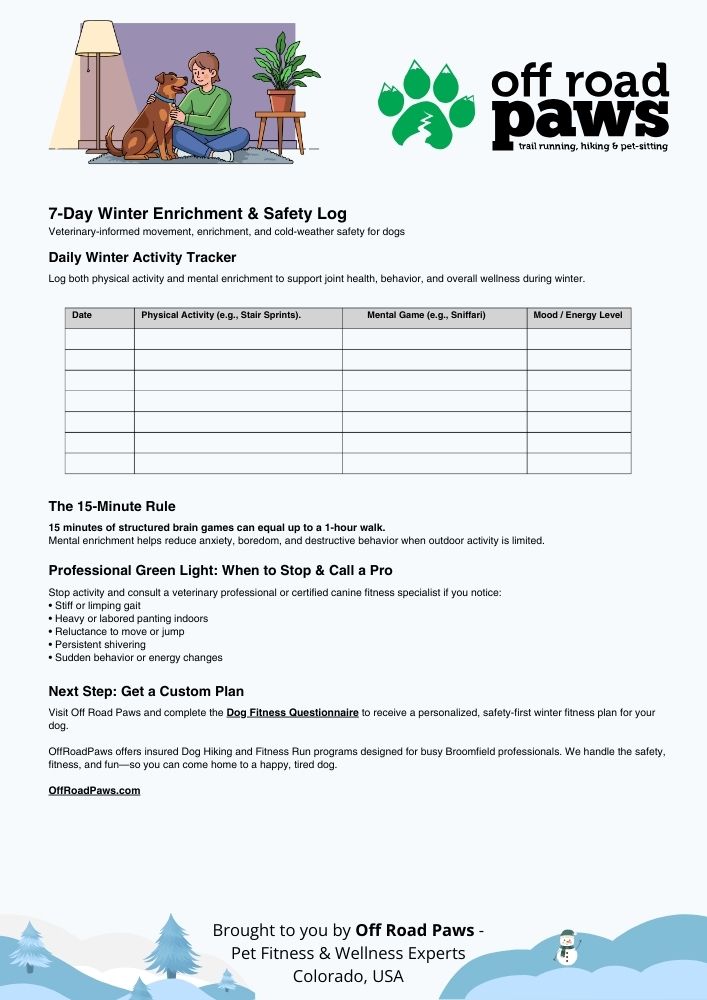
Expert Vet’s Tip: Mentally fatiguing your dog is highly efficient; 15 minutes of intensive brain games can be as exhausting as a one-hour walk.
Suggested 20-40 Minute Daily Routine
- Morning (5-10 mins): Scent work “Sniffari” with breakfast.
- Midday (10-15 mins): High-energy stair sprints or hallway fetch.
- Evening (5-10 mins): Low-impact “Two Feet Up” strength training or new trick practice.
- Before Bed: A frozen stuffed toy to promote licking and self-soothing.
The Off Road Paws Difference
Sometimes, home activities aren’t enough for high-energy breeds. Our veterinary-informed care at Off Road Paws integrates clinical knowledge with physical fitness to manage dog anxiety safely. Before starting any new high-intensity plan, ensure your pup has the “green light” from a professional, especially if they show signs of joint discomfort.
Complete our Dog Fitness Questionnaire to begin a proactive winter wellness plan for your pet.
Ready to Master the Colorado Winter?
Don’t let “winter blues” affect your pup’s health. Download our free 7-Day Winter Enrichment & Safety Log to track your 20–40 minute daily goals and stay ahead of critical veterinary safety thresholds.