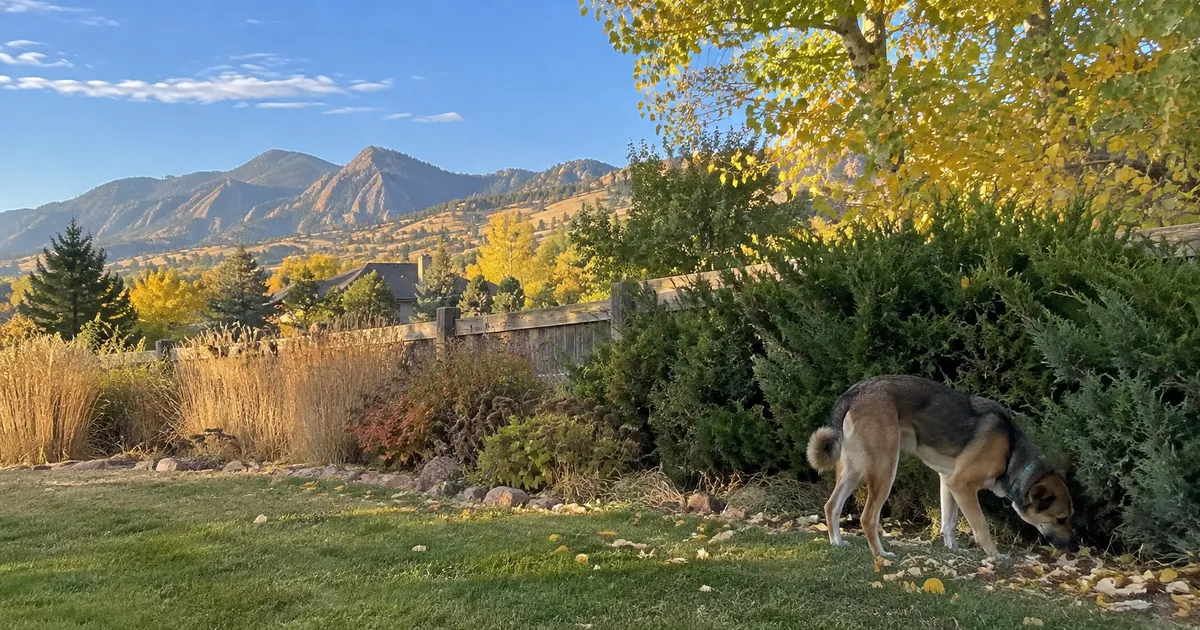
Search for poisonous plants for dogs and you will get several hundred species, listed alphabetically. The list is accurate. It is also close to useless when you are standing in your own back yard looking at the shrub by the fence, wondering.
Most of it does not grow here. A lot of it needs humidity, or a winter mild enough that Boulder County never delivers. So you scroll, you lose the thread, and the shrub stays a question mark.
The list of poisonous plants for dogs in Colorado is short enough to learn in an afternoon: a handful of garden ornamentals, a handful of wild species along local trails, and mushrooms in the autumn. Short enough to still remember on a Tuesday evening walk, which is the part that counts.
This guide covers what grows in Boulder County yards, what your dog meets on local trails, why fall raises the stakes, and the short kitchen list worth knowing. Not everything that could theoretically hurt a dog. The things that realistically might.
Why the national lists don’t help you much
The problem with an alphabetical database
Search toxic plants for dogs and the big reference databases come back first. They were built to be complete, not local. Completeness is the right goal for a poison control line taking calls from every state. It is the wrong shape for one person with one plant in front of them.
What you need is relevance: what is within reach of your dog, in your yard, on your street, on the trail you walk most weeks. That set is small, and it barely changes from year to year, which is why it is worth learning once properly.
Colorado State University’s veterinary school keeps a Guide to Poisonous Plants organised around what actually grows in this region. One caveat: its entries lean toward livestock, so it says little about dogs specifically. But for the prior question, does this plant even grow in Colorado, it beats a national index comfortably.
The ASPCA’s toxic and non-toxic plant database is the one to search once you have a name in hand. It does list toxicity by species for dogs, which the CSU guide does not.
Use the local source to narrow the field, then the national one to check a specific plant. That order is the whole trick, and it is backwards from the way most people search.
The plants that actually matter in Colorado
In the yard
Several of the most dangerous plants in Front Range landscaping were put there deliberately, because they look good and they survive our winters.
Yew is the one to learn first: a common evergreen hedge across Boulder County, and seriously toxic. Foxglove and lily of the valley both affect the heart. Iris causes stomach upset, concentrated in the roots. Chokecherry earns a mention because it is native and grows along ditches and fence lines all over the county, so it turns up in yards whether anyone planted it or not.
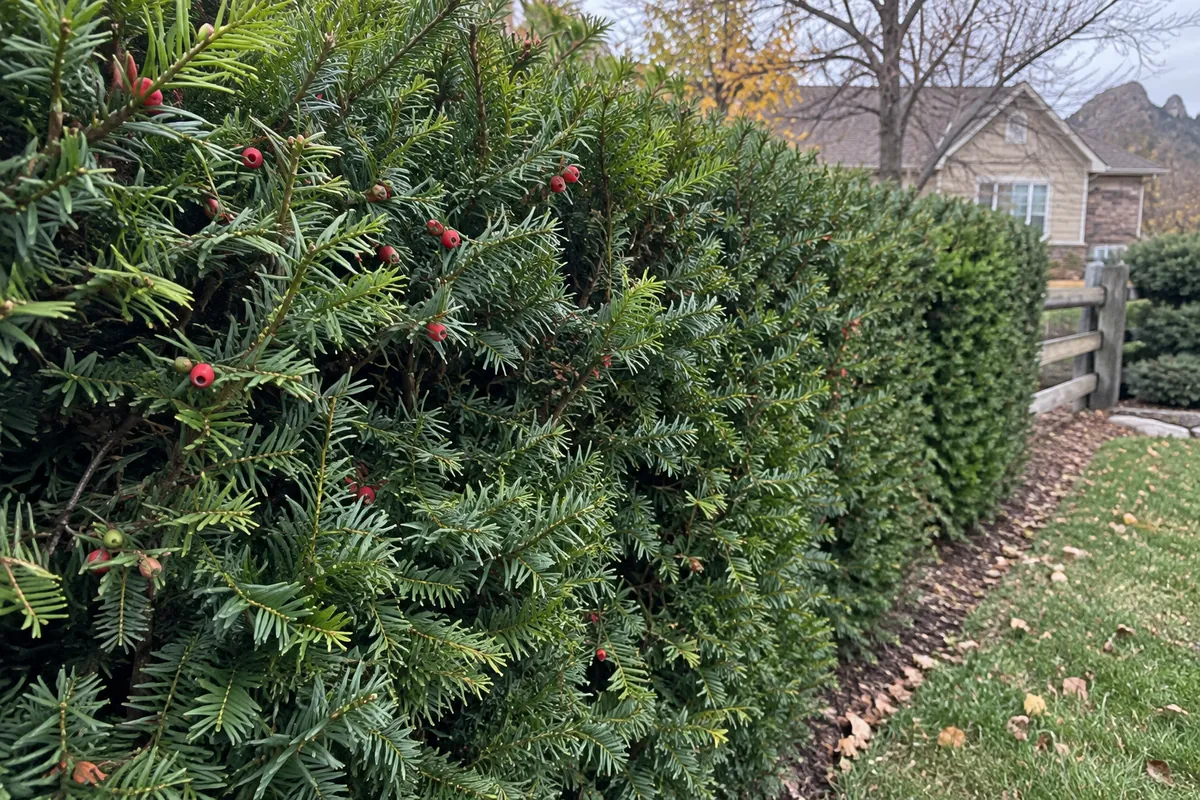
Bulbs are their own category, and they are why autumn planting deserves as much care as spring. Tulip and daffodil bulbs hold the worst of it underground, which is exactly where a digging dog finds them. You plant them in October. The dog watches you do it.
If one of these is already in the ground, you do not necessarily need to dig it out. Knowing it is there, and noticing whether your dog takes any interest, is usually enough.
On the trail
The wild list is a different list. Water hemlock is the most poisonous plant in Colorado. The USDA calls it the most violently toxic plant that grows in North America, and it grows here along wet ground and ditch lines. Death camas is the other one to know by name. Larkspur, locoweed and lupine round out the group most often flagged along Front Range trails.
A dog on a Voice and Sight tag covers more ground, and investigates more of it, than a dog on a six-foot lead. That is why trail exposure runs higher, and it is worth being honest about recall before you unclip at Marshall Mesa or Coal Creek.
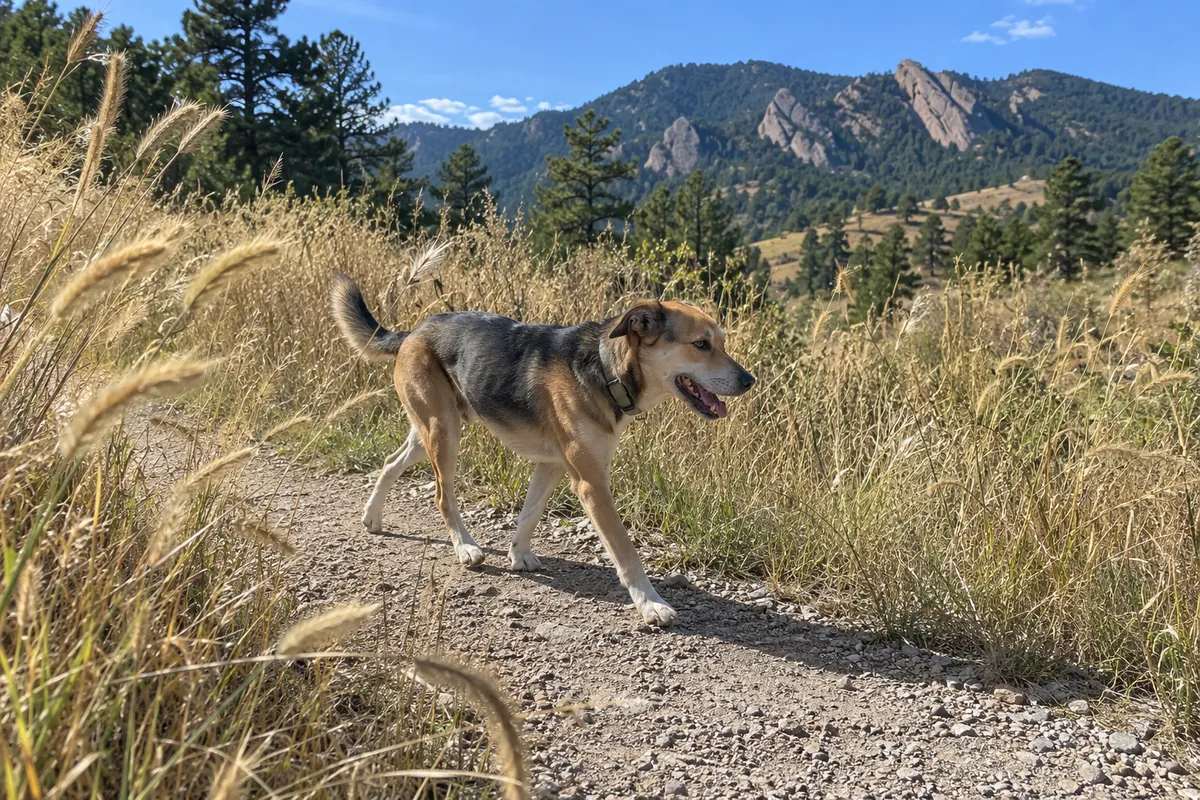
Foxtails belong here too, though they are not toxic at all. The barbed seeds work into paws, ears and noses. Different problem, same walk. Check feet and ears after any dry-grass hike.
| Where | Plant | Why it matters |
|---|---|---|
| Yard | Yew | Seriously toxic, and a common evergreen hedge across Boulder County |
| Yard | Foxglove, lily of the valley | Both affect the heart |
| Yard | Tulip and daffodil bulbs | The worst of it is underground, where a digging dog finds it |
| Yard | Iris | Stomach upset, concentrated in the roots |
| Yard | Chokecherry | Native, and grows wild along ditches and fence lines |
| Trail | Water hemlock | The most poisonous plant in Colorado |
| Trail | Death camas | The other wild species to know by name |
| Trail | Larkspur, locoweed, lupine | The group most often flagged along Front Range trails |
| Trail | Foxtails | Not toxic, but the barbed seeds injure paws, ears and noses |
Mushrooms: why autumn is the risk window
Mushrooms fruit in warm, wet conditions. Late summer storms followed by cooling nights are close to ideal, which is why a yard that held nothing in July can be dotted with them by mid-September.
Here is the part that surprises people. You cannot reliably identify them in the field, and neither can most experts without a closer look. Toxic species and harmless ones grow side by side and can look nearly identical, and the dangerous ones are rarely the lurid red-and-white storybook kind. They tend to be plain, brown and forgettable.
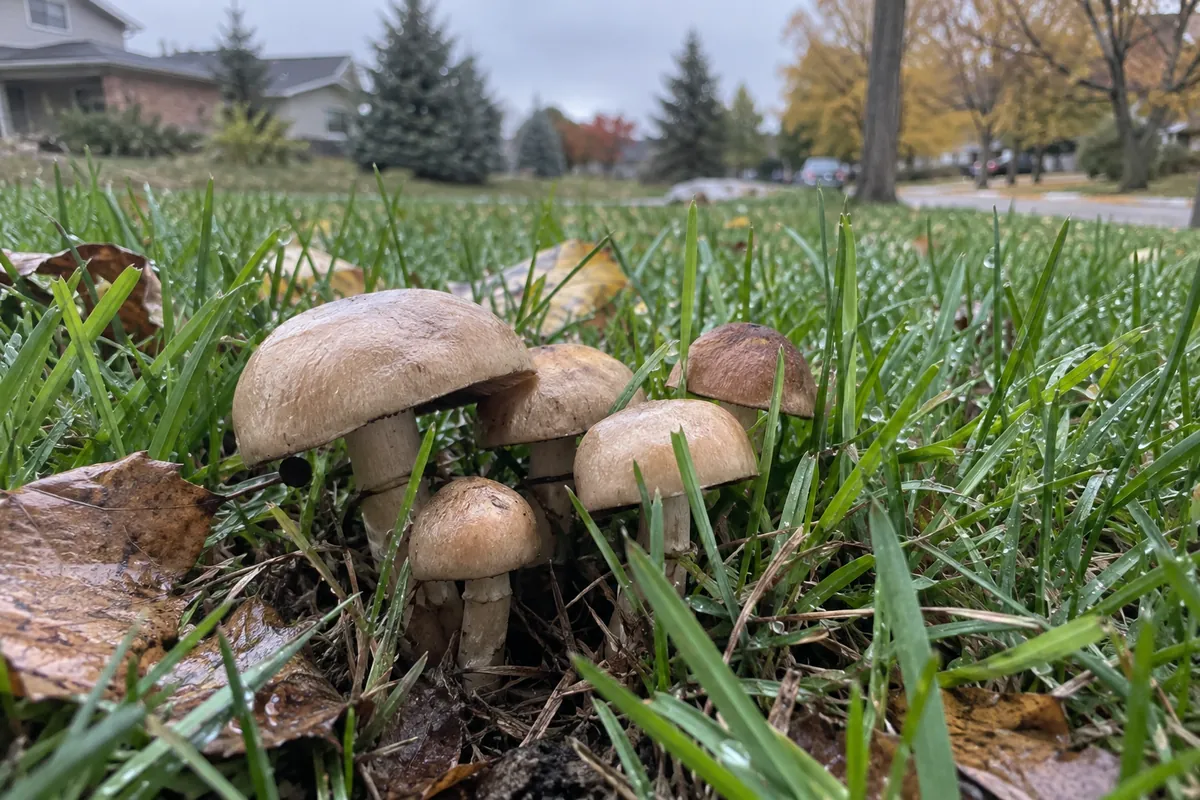
So the working rule is not identification. It is assumption. Treat every unknown mushroom your dog picks up as toxic until a vet tells you otherwise.
If your dog does eat one, photograph it where it grew, collect a piece if you can do that safely, and call. Vomiting, diarrhoea, weakness, tremors and unsteadiness are the signs reported most often, but timing varies by species, and some of the worst cases look mild at first before turning serious a day or two later. That delay is the argument against waiting to see what happens. VCA’s overview of mushroom toxicity explains what treatment usually involves.
The cheapest habit is the best one: walk your own yard after rain through the autumn and clear whatever has come up. Two minutes, and it removes the most likely exposure entirely. Carry the same habit onto the trail during fall hikes with your dog.
Foods and household items worth knowing
The kitchen list
The food list is shorter than most people expect. Chocolate, grapes and raisins, onions and garlic, macadamia nuts and alcohol are the ones with the clearest evidence behind them.
Xylitol belongs at the top of it. It is a sweetener in sugar-free gum, some peanut butters and a lot of baked goods, and it is dangerous to dogs in genuinely small amounts. If you use peanut butter for enrichment toys or to hide a tablet, read the label on that particular jar.
Dose and body weight change the picture enormously. A crumb of dark chocolate is a different event for a Labrador than for a terrier, which is why the first thing a vet asks is how much, and how big is your dog. Your dog’s actual weight is worth more in that moment than the list is.
Around the house
Most household toxins for dogs come from a small and fairly dull set of things. Human medication is the biggest single source, and it is usually a storage accident rather than a dog working a cupboard open.
Cleaning products and antifreeze account for much of the rest. Antifreeze deserves particular care, because it tastes sweet and small amounts do serious damage. Garages and driveways are where dogs meet it. The FDA keeps a useful list of potentially dangerous household items for pets.
The fix is unglamorous and it works: anything in that group goes above dog height or behind a latched door, and spills get cleaned up rather than left.
The Colorado list really is short
A few ornamentals, a few wild species, mushrooms through the autumn, and a handful of foods and household items.
That is the whole thing. You do not need to memorise a database. You need to know what is in your own yard, what grows where you walk, and which few kitchen items are genuinely dangerous. Relevance beats completeness.
If you think your dog has eaten something, do not wait for symptoms and do not try to identify the plant or mushroom yourself.
Call your vet or an animal poison control line, say what happened and how much your dog weighs, and bring a photo or a sample if you can get one safely. Acting early is almost always cheaper and easier than acting late.
Off Road Paws walks and runs dogs across Boulder, Louisville, Lafayette and Broomfield, which means a lot of time spent watching what grows along these trails. If you would like that on your own dog’s walks, here is how to get started.
Frequently asked questions
What plants are poisonous to dogs in Colorado?
In yards: yew, foxglove, lily of the valley, iris, chokecherry, and tulip or daffodil bulbs. On Front Range trails: water hemlock, death camas, larkspur, locoweed and lupine.
What should I do if my dog eats a mushroom?
Call your vet straight away rather than waiting for symptoms. Photograph the mushroom where it grew and collect a piece if you can do so safely. Do not try to identify it yourself.
How quickly do symptoms of plant poisoning appear in dogs?
It varies by plant and by how much was eaten. Some cause vomiting within minutes, others take hours or longer. Some serious cases look mild at first, which is exactly why waiting is risky.
Do dogs know to avoid toxic plants?
No, and it is a costly assumption. Dogs investigate by mouth, and young dogs in particular will chew things that taste unpleasant. Knowing what grows where you walk is far more reliable than instinct.