Why Dogs Are More Prone to Heatstroke—and How to Prevent It
Summer means more outdoor fun—trail runs, park play, and mountain hikes. But for dogs, warm weather can bring serious risks. Unlike humans, dogs don’t sweat through their skin. Their bodies rely mostly on panting to cool down. That makes them less efficient at handling heat, especially on long adventures.
Panting helps release heat through moisture in their breath. But it works best in dry, cool air. On hot, humid days, this system struggles. Dogs can’t remove body heat fast enough, especially if they’re running or hiking.
Some dogs are more at risk than others. Flat-faced breeds like Pugs and Bulldogs can’t breathe as efficiently. Older dogs, overweight pups, and those with thick or dark coats hold onto heat longer. Large dogs also cool down slower because of their bigger bodies.
Unlike humans, dogs don’t sweat through their skin—instead, they rely entirely on panting and vasodilation for cooling. Short-nosed or brachycephalic breeds struggle even more with heat dissipation due to their anatomy; for more details on how this affects your pet’s thermoregulation, check out this helpful resource from Cornell University’s Riney Canine Health Center.
Knowing how to prevent heat stroke in dogs starts with understanding their limits. When temperatures rise, a little extra care goes a long way. Your pup depends on you to keep them safe.
Common Causes of Heatstroke in Dogs—and When They’re Most at Risk
Warm weather brings fun, but it also raises the risk of heatstroke for your dog. Understanding when and how it happens can help you avoid dangerous situations.
Common Situations That Trigger Heatstroke
- Being left in a hot car is one of the biggest dangers. Even on a mild day, temperatures inside a car can rise fast (see AVMA’s safety guide) —often climbing 20 °F in just 10 minutes and over 40 °F in an hour—posing a serious risk of heatstroke to dogs. Even on a mild day, temperatures inside a car can rise fast—often climbing 20 °F in just 10 minutes and over 40 °F in an hour—posing a serious risk of heatstroke to dogs.
- Exercise during hot, humid weather can also cause overheating. Dogs may not stop when they’re tired, especially if they’re chasing a ball or hiking an exciting trail.
- Lack of water and shade adds to the danger. If your dog can’t cool down naturally, their body temperature can climb quickly.
- Overexertion during outdoor play is another risk. A fun run or hike can turn harmful if it’s too warm or too intense.
Even when it feels comfortable to us—like in the mid-70s—the ground, sun, and closed spaces can heat up fast, putting your dog at risk.
Which Dogs Are at Higher Risk During Summer
Some dogs are more sensitive to heat than others. Flat-faced breeds like Bulldogs and Pugs can’t pant efficiently, which limits their ability to cool off.
Senior dogs and those who are overweight often have lower stamina and trouble regulating body temperature.
Thick or dark-coated dogs absorb more heat, especially when they’re out in the sun. Dogs with heart or lung conditions can also struggle with even mild heat stress.
In places like Colorado, the dry climate can be misleading. It might not feel hot to you, but high elevation and strong sun increase the risk of heatstroke—especially on long walks, exposed trails, or blacktop surfaces.
Knowing these risks is the first step in learning how to prevent heat stroke in dogs. With the right awareness, you can plan safe, happy adventures all summer long.
How to Recognize Overheating in Dogs (and What to Do)
Dogs can overheat quickly—especially during summer outings. Knowing what to watch for can save your pup’s life. Some signs are subtle, while others signal an emergency. The sooner you act, the better the outcome.
Early Warning Signs of Heat Exhaustion
Download and Print these Dog Heatstroke Warning Signs
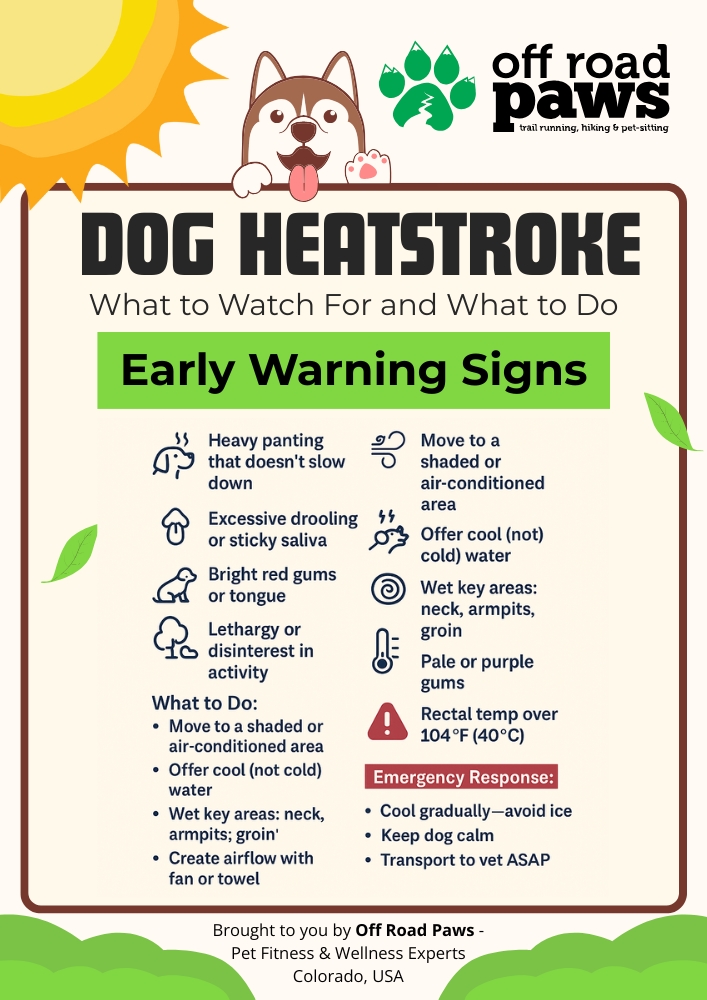
Look out for these early signs that your dog may be too hot:
- Heavy panting that doesn’t slow down
- Excessive drooling or thick, sticky saliva
- Bright red gums or tongue, often warmer to the touch
- Lethargy or acting weak, slow, or uninterested in walking
- Seeking shade or lying down away from activity
At this stage, take immediate action. Move your dog to a cooler place, offer fresh water, and use a fan or wet towels to help cool them down. This early response is a key part of how to prevent heat stroke in dogs.
Emergency Symptoms That Require Immediate Veterinary Care
If your dog shows any of these signs, don’t wait—get to a vet right away:
- Vomiting or bloody diarrhea
- Confusion or clumsy, uncoordinated movements
- Collapse, seizures, or sudden loss of consciousness
- Pale or purple gums, signaling poor circulation
- Rectal temperature over 104°F (40°C)
These symptoms indicate full-blown heatstroke—a life-threatening emergency. Call your vet or the nearest emergency animal hospital right away.
Even if your dog seems to recover, a vet check is still important. Heatstroke can damage organs, and only a professional can assess the full imp
Easy Ways to Prevent Heatstroke and Keep Dogs Cool All Summer
You don’t need fancy gear to protect your pup from summer heat. Simple habits go a long way in learning how to prevent heat stroke in dogs. With a little planning, you can enjoy sunny days safely—together.
Plan Outdoor Activities During Cooler Hours
Avoid the heat peak between 11 a.m. and 5 p.m. That’s when the sun is strongest and the ground holds the most heat. Instead, take walks or hikes:
- Early in the morning (before 10 a.m.)
- Later in the evening (after 6 p.m.)
At Off Road Paws, we adjust every adventure based on the daily forecast—so pets stay safe and comfortable.
Always Bring Water and Offer Frequent Breaks
Hydration is non-negotiable in warm weather. Whether you’re walking the block or climbing a trail:
- Pack a portable dog bowl
- Offer water every 15–20 minutes
- Take breaks in shady spots often
At home, a sprinkler or kiddie pool gives your dog a chance to play while cooling off.
Avoid Hot Surfaces Like Asphalt and Concrete
Blacktop and pavement can burn paws and boost body heat. Here’s a quick test:
- Place your hand on the surface for 10 seconds. Too hot for your hand? Too hot for paws.
- Stick to shaded trails or grassy areas
- Consider dog booties if surfaces are warm but walks are necessary
Never Leave Dogs in a Parked Car—Even With Windows Cracked
This is one of the most dangerous mistakes. On a 70°F day, a car’s inside can reach 110°F in 30 minutes. That spike happens fast, even with the windows open.
Leaving your dog in a running, air-conditioned car is risky too. If the engine fails, so does the cooling—and your pup can be in danger.
When in doubt, the safest choice is to leave your dog in a cool, secure environment.
Use Cooling Tools and Shade Tactics
There are many ways to help your dog stay cool while outside:
- Cooling vests or water-soaked bandanas
- Portable fans or shaded canopies
- Frozen dog treats or ice cubes in their water bowl
At Off Road Paws, we use these tools during every outing—so your dog can enjoy the adventure and stay safe.
When you know how to prevent heat stroke in dogs, you unlock a summer full of joy and play—without the worry.
What to Do if Your Dog Has Heatstroke: First Aid & Emergency Care Tips
If your dog starts to overheat, staying calm and acting quickly is essential. Fast, steady first aid can make the difference between recovery and crisis.
Immediate First Aid to Reduce Your Dog’s Body Temperature
Follow these steps as soon as you notice signs of overheating:
- Move your dog to a shaded or air-conditioned area right away.
- Offer small amounts of cool water—avoid gulping or forcing them to drink.
- Wet key areas like the neck, armpits, and groin with cool (not cold) water.
- Place a fan nearby or use your hands to create airflow over the wet areas.
Do not use ice water. Cooling your dog too quickly can cause shock, making the situation worse.
Your goal is to lower body temperature gradually—just enough to stabilize your dog.
When to Head to the Vet and What to Expect
If your dog’s symptoms don’t improve after 5–10 minutes of cooling, or if they seem confused, weak, or begin to collapse, go to the vet immediately.
Heatstroke can damage organs quickly. Veterinary care may include:
- IV fluids to hydrate and cool internally
- Oxygen therapy for breathing support
- Hospitalization to monitor organ function and temperature
The sooner you get help, the better your dog’s chances for a full recovery.
Knowing what to do in the moment—and when to call the vet—is a critical part of how to prevent heat stroke in dogs from turning deadly.
How Off Road Paws Prevents Heatstroke on Every Summer Adventure
At Off Road Paws, every adventure is built around one goal: your dog’s health and happiness. We go beyond basic walks to provide heat-smart, vet-informed outdoor care.
Customized Activity Plans Based on Heat, Breed, and Age
No two dogs are alike, especially in the summer sun. That’s why we tailor each outing to match your dog’s energy, coat type, and age.
- High-energy dogs enjoy their runs early in the morning, before the heat builds.
- Senior dogs get relaxed, shaded strolls with plenty of sniff breaks.
- Thick-coated pups are kept on cooler trails with frequent hydration stops.
We plan around real-time weather data and your dog’s unique needs—so every session is safe, fun, and effective.
Staff Training and Emergency Protocols You Can Trust
With over 12 years of veterinary experience, we’re trained to spot heat stress before it becomes serious.
- Our team always carries water, collapsible bowls, and first-aid tools.
- We check trail temperatures and surface heat before each trip.
- If the weather shifts, you’ll be the first to know—we adapt plans to keep your pup safe.
Your trust matters to us. That’s why we prepare for every adventure like it’s our own dog coming along.
When it comes to how to prevent heat stroke in dogs, it’s not just about rules—it’s about heart, knowledge, and constant care. That’s the Off Road Paws promise.
Final Thoughts: How to Prevent Heatstroke in Dogs with Care and Confidence
Summer is meant for tail wags, trail trots, and shared joy between you and your pup. But when temperatures rise, your awareness becomes your dog’s best protection.
By knowing the signs of overheating, adjusting your routines, and preparing for the heat, you’re doing more than just preventing danger—you’re actively caring for your dog’s well-being.
From early morning walks to shaded playtime, small decisions add up. They create a season full of safe, happy memories.
At Off Road Paws, we believe that every pet deserves a summer filled with trust, safety, and love. Whether we’re hiking mountain paths or making backyard visits, we treat every dog like family. That’s care beyond the leash.
Because knowing how to prevent heat stroke in dogs isn’t just smart—it’s loving. Book a Safe Summer Adventure with Off Road Paws