The dog park is free, five minutes away, and full every evening. It’s also the place many trainers and veterinarians quietly steer their clients away from. Both are true, and if you’ve been going, you haven’t done anything wrong.
Search for alternatives to dog parks and you get a rented backyard on Sniffspot, a training class, a daycare room, a hardware store aisle. Each one swaps a fenced pen for a different kind of confinement.
Boulder County can offer what most places can’t. The City of Boulder’s Open Space and Mountain Parks (OSMP) runs the Voice and Sight Tag Program, which lets a registered dog go off leash on designated trails. That is real off-leash freedom, without the crowding, the contagious illness exposure, or the unscreened dogs.
Boulder County dog park alternatives include off-leash open space under Voice & Sight, long-line trail time, private rental yards, structured walks, screened small-group trail hikes, dog running, and structured playdates or training classes.
Below are all seven, ordered free and local first, starting with where your dog can actually run off leash near you, plus a short way to work out which one fits.
Why don’t vets and trainers recommend dog parks?
Veterinarians and trainers steer clients away from dog parks for three reasons: injury from fights between dogs who don’t know each other, contagious illness spreading where no one checks vaccination records, and behavior problems that get rehearsed instead of resolved. None of that means your local park is dangerous. It means the risks are predictable, and worth knowing before you go.
Professionals don’t object to off-leash play. They object to what an unscreened, unsupervised enclosure reliably produces. Veterinarians see preventable illness. Trainers watch dogs rehearse the exact behavior their owners are paying to fix.
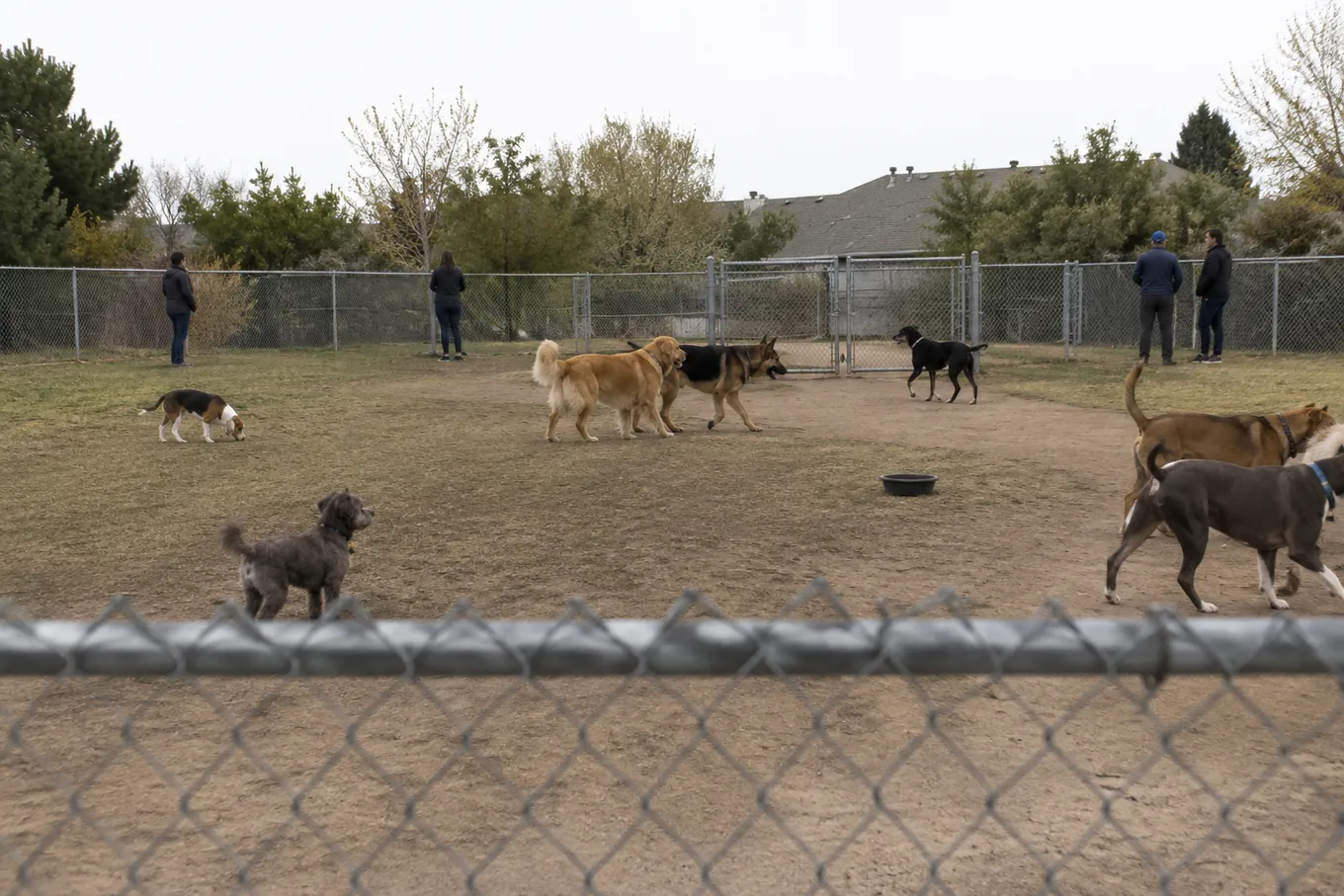
- Disease spreads where vaccination isn’t checked. Most public parks don’t require proof of current vaccination, and none enforce it at the gate. Kennel cough, canine influenza, giardia, and parvovirus all move through shared ground and communal water bowls. Puppies are the most vulnerable of all, because the core vaccine series isn’t complete until the final dose at 16 weeks or later.
- Reactivity gets rehearsed. Every lunge, bark, or freeze a dog practices becomes easier to repeat. A reactive dog in a crowded park isn’t socializing, it’s drilling the behavior you’re working to change.
- Recall quietly erodes. Off-leash time where “come” is never required teaches a dog that “come” is optional. Weeks of that undo the recall you’ll want on a trail.
- Over-arousal gets misread as play. The Lab who slams into every dog at the gate looks joyful. To the dog absorbing it, that’s pressure. Arousal climbs, someone snaps a warning, and a scuffle follows.
- Resource guarding stacks up. Sticks, balls, gates, the water bowl: all things a dog can decide to own. Pile on a few small stresses and a dog who’s usually fine stops being fine.
Are dog parks always a bad idea?
No. Dog parks are neither good nor bad on their own. The answer depends on which dog and which park. A confident, well-socialized, resilient dog at a quiet park at 7am is having a completely different experience than the same dog at 5pm on a Saturday.
Space and timing do most of the work. A large park with a handful of dogs spread across it bears almost no resemblance to a small enclosure with twenty dogs funneled through one gate. Early mornings and weekday off-peak hours give you fewer dogs, more space, and a calmer tone. If your dog does well and you go when it’s quiet, that’s a real thing that’s working.
Do dogs actually enjoy dog parks?
Some genuinely do, and some are coping rather than enjoying. The difference is visible if you know what to watch for, and it shows in your dog’s body language over the first ten minutes rather than in whether they seem tired afterward.
Signs your dog is genuinely enjoying it:
- Loose, wiggly body, with no stiffness through the shoulders or spine
- Reciprocal play, where both dogs take turns chasing and being chased
- Voluntary breaks, where your dog pauses, shakes off, then re-engages
- Checking in with you, glancing back and orienting to where you are
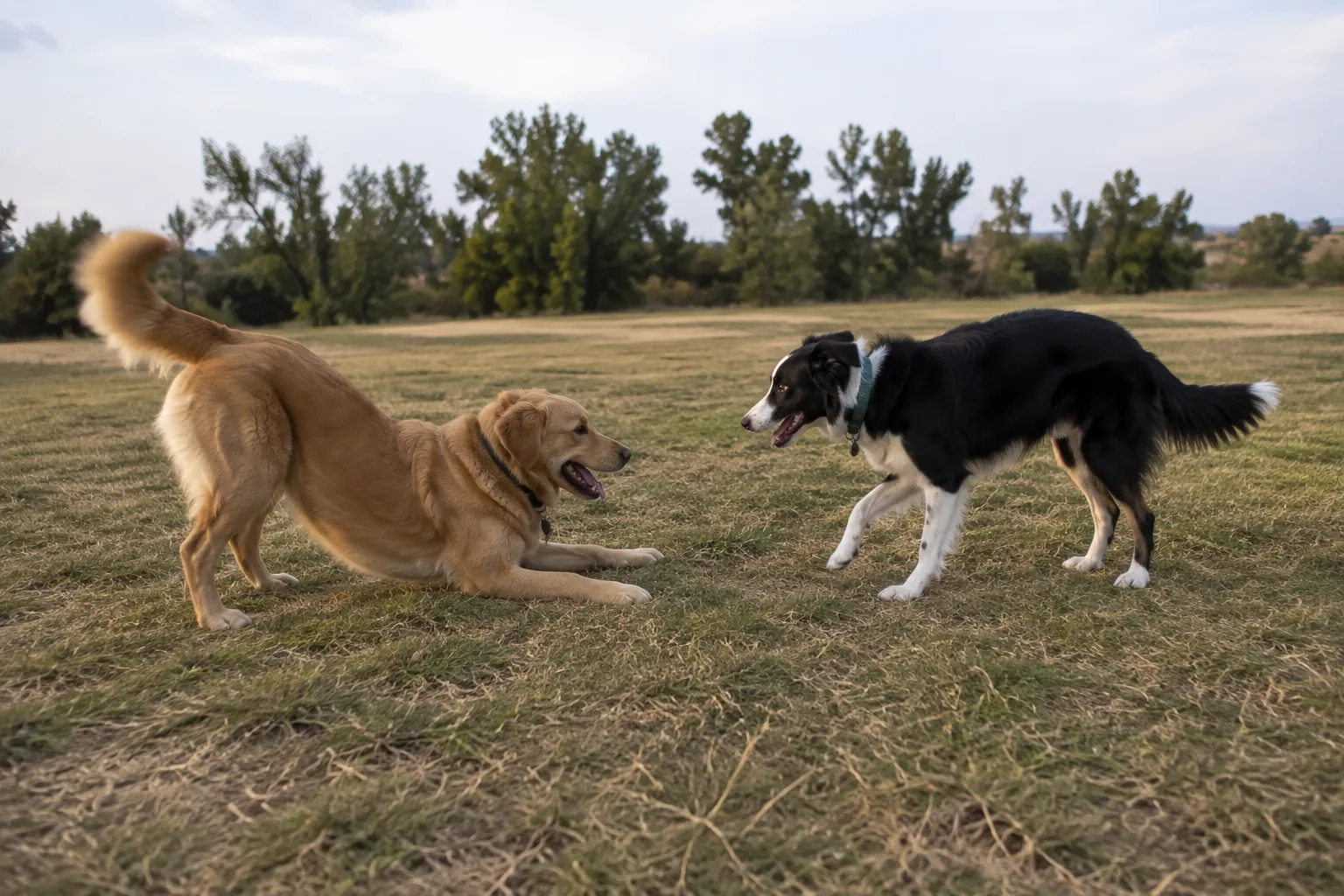
Signs your dog is coping rather than enjoying:
- Whale eye, meaning the whites of the eyes show as your dog looks sideways without turning their head
- Tucked tail, or a lowered, hunched posture
- Excessive yawning or lip licking when nothing warrants it
- Hiding behind you or retreating to a fence line
- One dog relentlessly chasing another who is trying to disengage
One signal on its own isn’t a crisis. Several together mean it’s time to step in and give your dog a break. Leave on a good interaction rather than after a bad one, because dogs remember endings. Learning to read your dog’s body language is the single most useful skill for deciding whether today is a park day.
7 dog park alternatives in Boulder County
1. Off-leash open space under Voice & Sight
If you’re wondering where you can take your dog to run off leash near you, this is the answer most guides never reach. The City of Boulder’s Open Space and Mountain Parks department lets guardians hike with dogs off leash on designated trails through the Voice and Sight Control Tag Program, one of the few systems on the Colorado Front Range that permits it at all. Registration takes a course, a rabies certificate, a fee between $13 and $75 depending on where you live, and up to a month end to end.
Here’s what it actually takes.
- Complete the education course. It’s free, online, and required for registration.
- Provide a current rabies certificate. City of Boulder residents must also hold a valid city dog license before registration will open to them.
- Register and pay. Fees run $13 for City of Boulder residents, $33 for Boulder County residents outside the city, and $75 for everyone else. Tags expire December 31 each year and must be renewed.
- Wait for the tag. Allow up to seven business days for delivery, and budget up to a month for the whole process.
The behavioral bar is higher than most people expect. You must be able to prevent your dog from charging, chasing, or showing aggression toward any person or dog, and from chasing or disturbing wildlife and livestock. Your dog must come to you and stay with you immediately on command, without regard to circumstances or distractions. That last clause is the whole thing. Not “usually.” Not “unless there’s a rabbit.”
There’s no test. Registering is you stating that you and your dog meet the standard, which means the honesty has to come from you.
A few practical realities. You can walk no more than two dogs under Voice and Sight, and you must carry a leash for each one. On trails where staying on-trail is required, dogs must remain within 20 feet of it. Rules are posted at each trailhead and they change seasonally, so check the sign every single time.
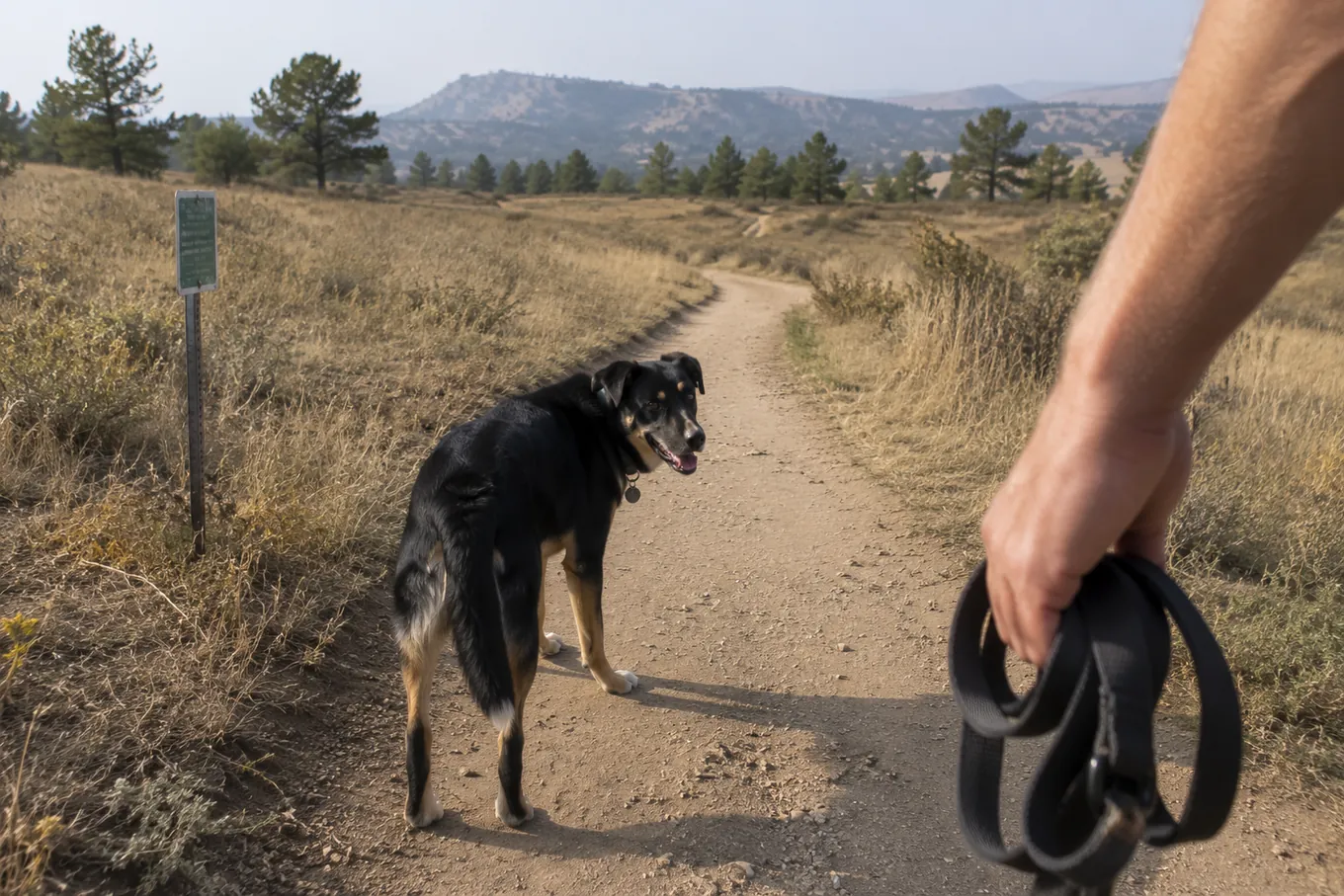
Voice & Sight applies to City of Boulder open space only. It is not recognized in Louisville, Lafayette, or Broomfield, and it is not what governs designated off-leash areas like Davidson Mesa in Louisville or Westminster Hills. Those are a different thing with different rules, and both are covered in the city-by-city table further down.
Who this isn’t for: dogs without reliable recall. If “come” is a suggestion when something interesting moves, this isn’t your option yet, and options 2 and 3 are built for exactly that dog.
For trail-by-trail detail, see our guide to the best dog-friendly hikes in Boulder.
2. Quiet trail time on a long line
A 15 to 30-foot long line on a well-fitted harness gives your dog real freedom to move and sniff without requiring the bulletproof recall that Voice & Sight demands. In much of Boulder County it isn’t just a middle ground, it’s the only legal option, because outside City of Boulder open space most parks and trails are leash-only.
Lafayette is the clearest example. The city requires dogs to be under physical control at all times off your own property. The Great Bark Dog Park is the only public place in the city where dogs may be off leash, and every other park and open space is strictly leash-only. Electronic collars don’t count as control, and City of Boulder Voice and Sight tags are not recognized in Lafayette. A long line isn’t a compromise here. It’s the answer.
Three places that suit a long line
Waneka Lake Trail loops 1.2 miles on a mostly soft surface, 8 to 10 feet wide, crushed gravel that holds up in most weather, with a bathroom and drinking fountain at the boathouse. The Coal Creek Trail system runs over 14 miles through Lafayette, Louisville, and Boulder County, mostly soft-surface and following the creek. On the Erie stretch, expect possible coyotes and water or ice underfoot depending on season. Kneebone Open Space offers open grass meadows, covered in more detail in our Lafayette trail-running guide.
Why a sniffing walk tires a dog out
Sniffing is work. A dog processing scent is running a demanding mental task, and thirty minutes of genuine sniffing will settle most dogs more thoroughly than a brisk two-mile march on a tight leash. Distance isn’t what drains them, decision-making is.
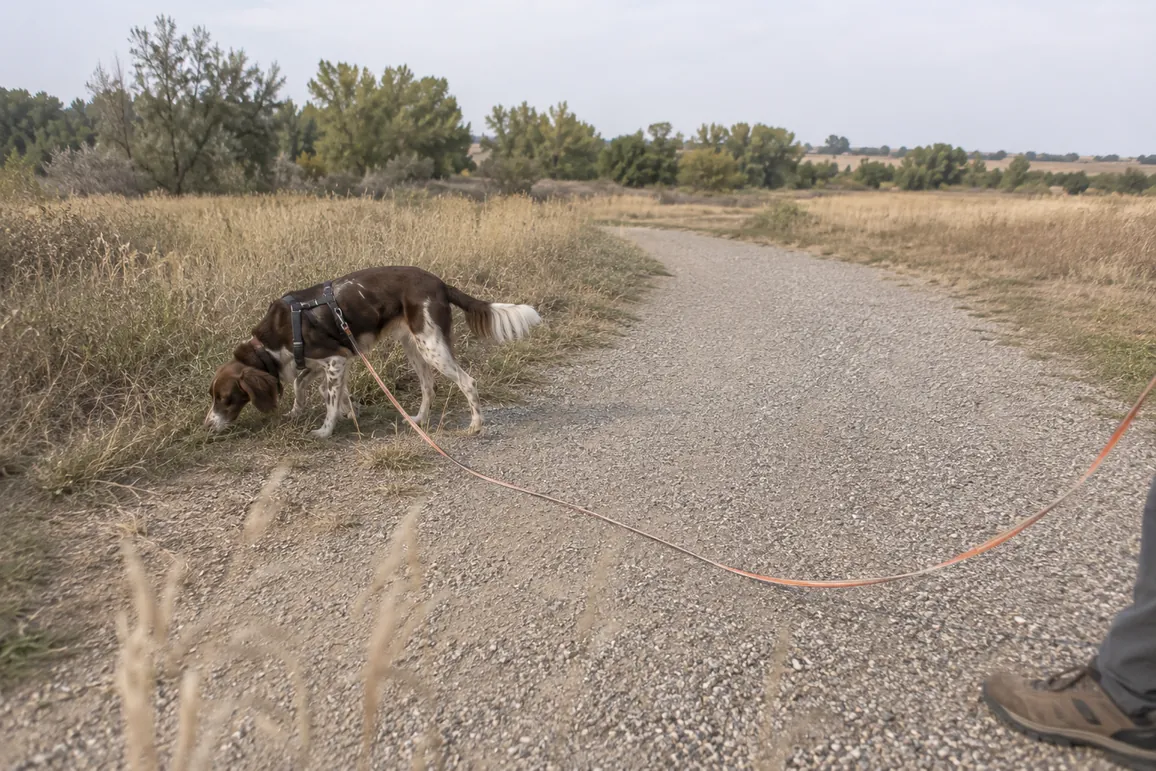
Handling matters more than most people expect. Clip to a harness, never a collar, because a dog hitting the end of a long line at speed can hurt its neck. Keep the slack gathered near you on busy stretches, and watch for the line sweeping across bikes, other dogs, and legs.
3. Private rental space (Sniffspot and similar)
Private dog park rentals let you book a fenced piece of private land for your dog alone, in time blocks, with no other dogs present. Hosts answer a detailed questionnaire about their property covering size, terrain, fencing, and how close other dogs or animals are. Users submit vaccination records and attest that their dogs are on flea and parasite prevention, and the platform carries liability and damage coverage.
For some dogs this is the best option on this list, not a consolation prize. Book one if your dog is reactive and needs space without surprises. Book one if you’re rehabbing an injury or recovering from surgery and need controlled movement. Book one during a fear period, when a bad encounter can leave a lasting mark. And book one if your recall is honestly unreliable and you want your dog to actually run.
Booking your own block also means choosing the hour. A dog who does better before the world wakes up can have the space at 6am, and a dog who needs to run flat out can do it without steering around anyone.
The limits are worth knowing first. It’s paid, by the half-hour or hour. Listings vary enormously in size and quality, from genuine acreage down to a suburban backyard. Check what’s actually bookable near you before assuming it’s an option, because coverage is uneven across Boulder County. Rates change and vary by host, so check current pricing directly on the platform.
The free versions of the same idea are worth knowing too. A friend’s securely fenced yard costs nothing, and an empty school field or tennis court during off-peak hours gives you a contained space for fetch. Confirm the site allows dogs before you rely on it.
And it’s still a fenced yard. That’s the trade this whole article is about. If your dog can safely be off leash on open trail, a rental is a smaller version of what’s already available to you for free. If your dog can’t, it’s the right call, and there’s no shame in that being your dog.
4. Structured walks
A structured walk isn’t a longer walk. It’s a walk with rules: consistent leash position, deliberate changes of pace, sniffing breaks that start and stop on your say-so, and regular check-ins between dog and handler. The dog isn’t just covering ground, it’s paying attention. You don’t need a trainer or special equipment to run one, only a plan you hold to.
That attention is what wears them out. A dog wandering at the end of a loose leash makes almost no decisions. A dog working with you is tracking where you are, reading what comes next, and adjusting continually. Same route, same distance, entirely different demand, and it shows in how the dog settles afterward.
The sniffing still happens. It’s just scheduled. Ten seconds of “go sniff” as a reward for a stretch of nice loose-leash work teaches something a free-for-all never does: that paying attention is how good things get unlocked.
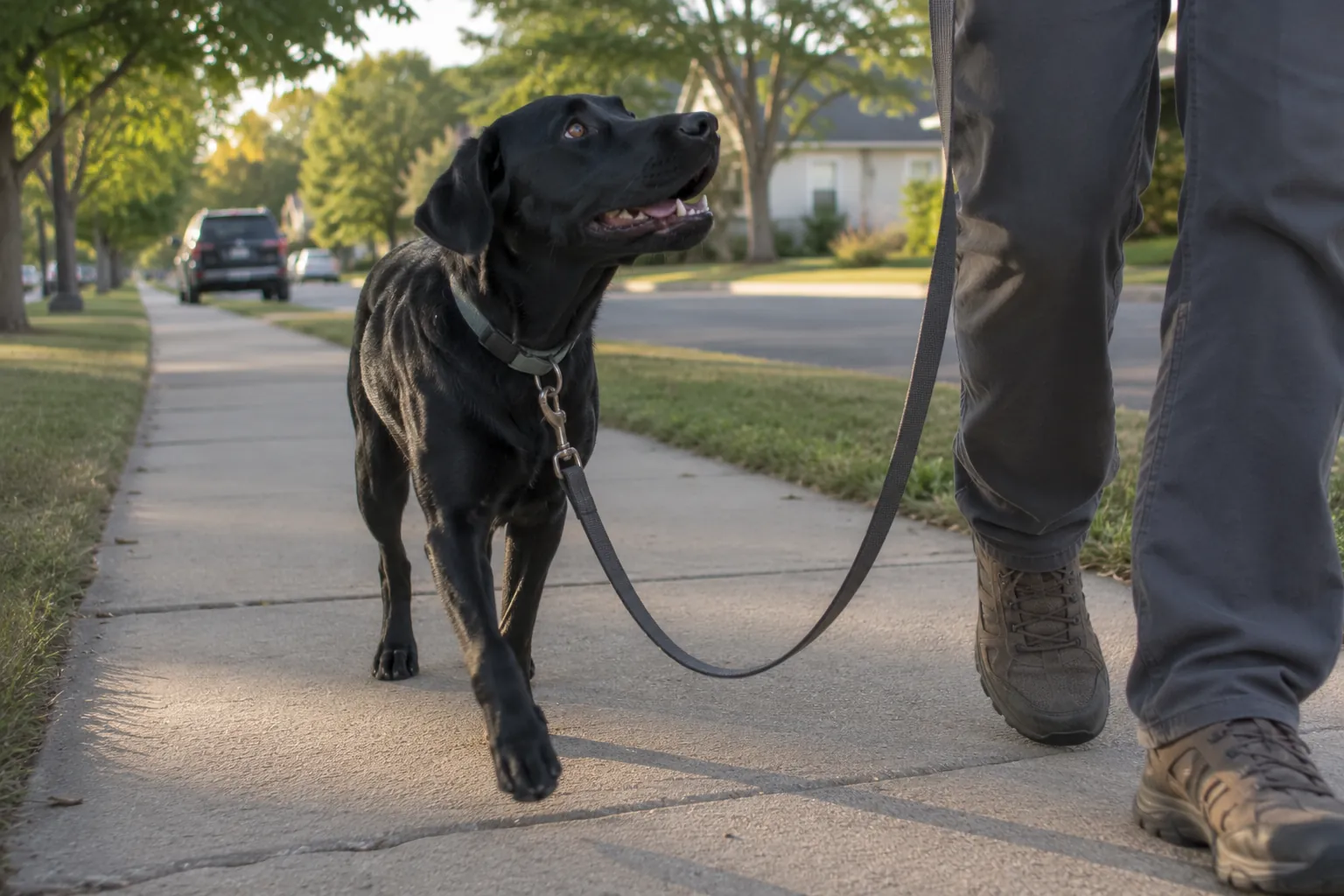
This suits high-drive dogs who come home from ordinary walks looking for a job, reactive dogs who need a predictable structure to feel safe in, and adolescents in the messy stage where everything they knew seems to evaporate. It suits households where the dog still has more in the tank than the humans do, which with a working breed in Boulder County is most evenings.
It asks something of you, though. A structured walk means staying engaged for the whole thirty minutes rather than walking with one hand on your phone, and on the days you don’t have that in you, an ordinary loose-leash wander is the better choice. Done half-heartedly it’s just a walk with more friction.
It’s also the option that travels. The structure works on a neighborhood sidewalk, which matters on the days nobody’s driving to a trailhead. We go deeper on the method in our guide to the structured dog walk.
5. Small-group trail hikes
A screened group hike does the one thing a dog park structurally cannot: it controls who your dog meets. Dogs are matched by size, temperament, and play style, and the makeup of a group changes when it isn’t working. At a public park, the composition changes every time the gate opens and nobody is deciding anything.
Movement changes what dogs do with each other. In an enclosure, the other dogs are the entire event. There’s nothing else to attend to, so everything becomes about who’s doing what to whom. On a trail, the dogs have somewhere to be. The line keeps moving, there’s ground to cover, and the social question stops being the only question.
This is also the clearest answer to whether dog parks are good for socialization. What a group trail hike produces is social exposure without social pressure. Your dog spends an hour near other dogs, reads them, adjusts, and mostly gets on with walking. That’s the skill that transfers to the rest of life: being calm around dogs rather than needing to engage with all of them. A dog who tightens up in a confined space frequently settles on a moving trail, because distance and a job arrive at the same time.
Small genuinely matters. Groups of two to three dogs, with roughly 70 to 90 minutes of trail time, keep every dog observable. Add more and you lose the ability to watch each one, which is the entire point of screening them in the first place.
Who this isn’t for: dogs who are actively reactive to the point of lunging or snapping at dogs at any distance. A group hike is a step up from solo work, not a starting point, and a dog who isn’t ready will spend the hour over threshold rather than learning anything. Options 2 and 3 come first.
6. Dog running and canine fitness
Some dogs are simply built to move more than a household can supply. Young Vizslas, German Shorthaired Pointers, Aussies, Border Collies, and mountain breeds bouncing off the walls at 8pm don’t have a behavior problem. They have an unmet output requirement.
For these dogs, intensity does what duration can’t. An hour of ambling leaves a fit working dog barely warmed up. Twenty-five minutes at a real pace, on terrain that makes them work, reaches something a longer slow walk never touches. The goal isn’t exhausting the dog, it’s meeting an athletic animal at its actual level.
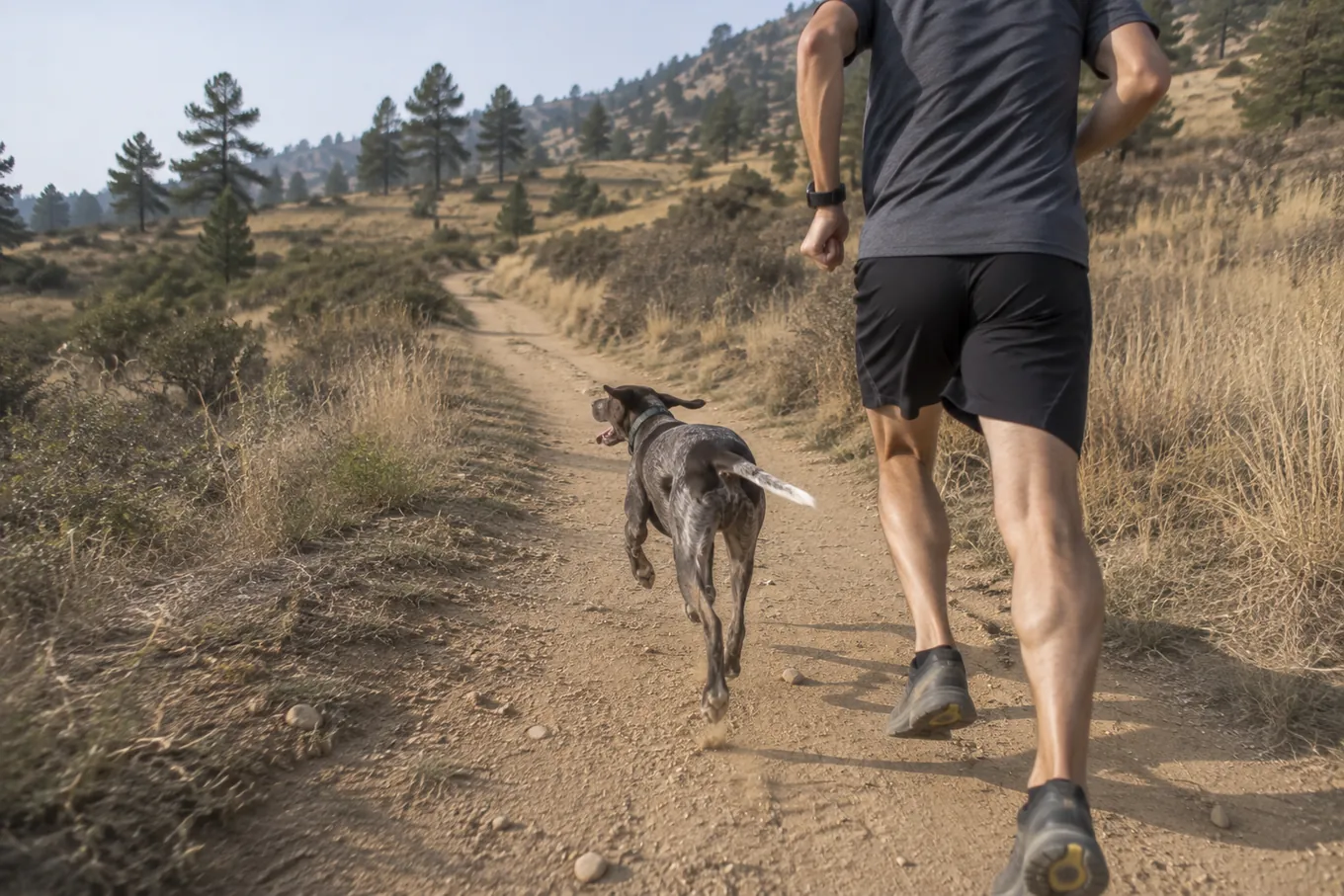
Not every dog belongs in this category, and that matters. Short-snouted breeds like pugs and bulldogs have narrower airways and are prone to breathing difficulty during exercise and to overheating. Adolescents need a slower entry too, since jogging isn’t recommended before growth plates have fused, typically 14 to 18 months and later in large breeds. Dogs carrying extra weight and seniors both need a gradual build. Before starting any running routine, have your veterinarian confirm your dog is in shape for the workload you have in mind.
Front Range conditions set the terms. Heat at Boulder’s altitude doesn’t behave the way the same number does at sea level, and pavement holds warmth long after the air has cooled. Water access shapes route choice more than distance does through summer. Plan for early mornings from June through September, and be honest about footing once ice arrives.
7. Structured playdates and training classes
Are dog parks good for socialization? Less than most people assume. A well-socialized dog isn’t the one who greets everybody. It’s the one who can walk past a strange dog without it becoming an event. A park teaches the opposite lesson, that every dog is an invitation.
A playdate you set up yourself fixes most of that.
- Confirm vaccinations first. A conversation, not an assumption.
- Match play style, not just size. A wrestler and a chaser will frustrate each other no matter how well-intentioned both are.
- Meet on neutral ground. Neither dog’s home turf.
- Keep it to twenty or thirty minutes. Ending while things are still going well beats a long session that sours in the final ten.
Stay involved throughout. A playdate isn’t a chance to check your phone.
Classes work differently, and that’s the point. In a nosework, agility, rally, or manners class, your dog has a job. The other dogs are present but irrelevant to the task at hand, which is a fundamentally different experience from a trail hike where dogs move together, and a completely different one from a park where other dogs are the whole event.
That’s what makes classes useful for dogs who find other dogs too interesting. The work gives them somewhere else to put their attention, with a professional watching and a room set up to keep everyone under threshold.
Which dog park alternative fits your dog?
The right option depends less on what you want and more on the dog you actually have. Answer honestly. Nobody’s watching, and an unflattering answer about recall saves you a genuinely bad afternoon.
| Your dog | Best options | Why |
|---|---|---|
| Reliable recall, enjoys other dogs | Off-leash open space under Voice & Sight | Your dog qualifies for the thing most owners want and few can safely use |
| Recall still developing | Long line on quiet trails, or a private rental | Freedom without asking your dog for a skill it hasn’t built yet |
| Reactive, fearful, or recovering from injury | Private rental, solo trail time, or one-on-one work | Needs guaranteed control over who it encounters, which rules out anywhere the public can walk in |
| Enormous energy, indifferent to other dogs | Dog running, structured walks, canine fitness | This dog doesn’t need friends. It needs output, and the social question is a distraction |
| Genuinely social with good boundaries | Screened small-group hikes, matched playdates | Your dog can handle company. The value is in choosing which company |
| Senior or mobility-limited | Short, quiet, flat, low-traffic outings, timed to avoid crowds | Quality of the outing beats length. A calm twenty minutes on even ground beats an ambitious hike |
| Puppy under 16 weeks | Private rental, a friend’s fenced yard, or a vaccinated-only class | The core vaccine series isn’t complete yet, and shared public ground is where the risk sits |
Most dogs land in more than one row, and that’s the useful part. A high-energy dog with shaky recall wants running and a long line, not one or the other.
Boulder County dog park alternatives by city
Rules differ sharply from town to town, and a tag that works in one place is worthless three miles away. Here’s the practical picture.
| Location | City | Leash status | Best for | Watch out for |
|---|---|---|---|---|
| OSMP designated trails | Boulder | Off-leash with Voice & Sight tag | Reliable-recall dogs wanting real freedom | Seasonal on-leash closures; check trailhead signs every visit |
| Davidson Mesa off-leash area | Louisville | Off-leash, fenced | Dogs needing secure space to run | Closes for wet or muddy conditions; call the HOWL line first |
| Louisville Community (Dog) Park | Louisville | Off-leash | Quick local off-leash time | Open 6am to 10pm; standard dog-park crowding dynamics |
| Coal Creek Trail | Lafayette / Louisville | On-leash | Long-line decompression walks | Bikes on shared sections; ice and standing water in season |
| Waneka Lake Trail | Lafayette | On-leash | Easy loop, seniors, gentle outings | Busy shared path; cyclists on blind curves |
| Kneebone Open Space | Lafayette | On-leash | Open-meadow long-line time | Leash-only, strictly enforced; no exceptions |
| Great Bark Dog Park | Lafayette | Off-leash | The only legal off-leash spot in Lafayette | Single option means it concentrates local demand |
| Broomfield off-leash dog parks | Broomfield | Off-leash | Fenced, separated small and large areas | Everywhere else in Broomfield is leash-only |
| Westminster Hills Open Space | Westminster (outside Boulder County) | Off-leash, partially fenced | Big-space running | A drive; partial fencing means recall still matters; seasonal wildlife closures |
Two things are worth carrying with you. Boulder’s Voice & Sight tags are valid on City of Boulder land only, and neighboring towns don’t recognize them. And timing beats location for crowding: early mornings and weekday off-peak hours transform any of these places.
The freedom is already here
Most guides to this topic hand you a smaller, paid version of the same enclosure: a rented yard, a daycare room, a class. Those have their place, and for some dogs they’re genuinely the right answer. But they’re not what Boulder County actually offers.
What’s here is open space, miles of trail, and a tag program that lets a well-trained dog move freely across real terrain. That’s not a substitute for the dog park. It’s the thing the dog park was always a poor imitation of.
None of this means never going back. Some dogs do well at a quiet park on a weekday morning, and if yours is one of them, keep going. The point is having somewhere else to turn on the days it isn’t the right call, when it’s crowded, when your dog is off, when the mix at the gate looks wrong.
Start with the option that matches the dog you have. If you’d like a hand with the trail-led side of it, Off Road Paws can help. You can see how we get started whenever you’re ready.
Frequently asked questions
Why don’t vets recommend dog parks?
Veterinarians point to three risks: injury from fights between dogs who don’t know each other, contagious illness spreading where no one checks vaccination records, and behavior problems that get rehearsed rather than resolved. Most public parks can’t verify any dog’s health or history.
Do dogs actually enjoy dog parks?
Some genuinely do, and some are coping rather than enjoying. Watch for loose body language, reciprocal play, and voluntary breaks. Whale eye, a tucked tail, excessive lip licking, or hiding behind you mean it’s time to leave.
Why shouldn’t you take your dog to a dog park?
A dog park is worth skipping if your dog is reactive, fearful, recovering from surgery, or still completing its vaccine series. In Boulder County, off-leash open space under Voice & Sight, long-line trail time, or a private rental all give freedom without the unscreened crowd.